If Building New What Are 3 Things to Consider When Choosing a Site? Culinary Arts
Is Culinary Arts the Career for You?
Just because you like to cook doesn't hateful you accept what it takes to be a professional chef. Obviously love and curiosity of nutrient is a start, only there are countless intangibles to becoming a successful cook or chef that must be considered when choosing this career path.
Culinary Arts & Industry
Many people are drawn to the culinary field because of its artistic side. They enjoy working with their hands creating flavorful foods and exciting presentations that provide instant gratification to their guests. When considering the culinary field as a career path consider the positives and negatives in terms of your own personality.
School Or Work?
Earlier spending money on school, it's a good thought to piece of work in the industry to encounter if yous like it. Just because you lot enjoy cooking for family unit and friends doesn't mean yous will like professional cooking. A culinary professional ofttimes works nights, weekends, and holidays.
The Kitchen Environment
Professional cooking is a physical sport and a marathon at that. Strong physical endurance and stamina are required. You lot will be standing on your feet for long hours at a time; yous will go blisters and calluses on your hands, burns on your arms, and cuts on you fingers. The stress can be overwhelming, especially during peak blitz times at breakfast, tiffin, or dinner. In that location is never enough time to become things washed, and you must constantly be performing multiple tasks at once to stay ahead of the game. A cook who is focused and organized will overcome these obstacles.
Professional kitchens can be small, cramped spaces, and often ill-equipped. They may be hot, stuffy, and filled with tools and equipment that can burn, cut, or even maim y'all. The estrus of the kitchen, especially in summers, tin can be unbearable. Improvisation is a way of life in the kitchen because you may not have the proper equipment or the right ingredients to do a particular preparation. Those who succeed and advance in this surround are able appraise and adjust quickly to the needs of the operation.
Work for the Best - Seek a Mentor
The chef, managers, and owners may non be the kindest people, and you may find some of the people y'all work with to be crude and hard to get along with. There may be alcohol, drug corruption, or behavioral issues that bear upon the mood of the establishment. The skillful news is that there are reputable chefs and restaurateurs who can mentor and help you learn and grow in the field. They maintain a respectful business that doesn't tolerate harassment or hostility in their workplace and attract likeminded employees. These are the people you want to work for when building your culinary career.
Adapting to the Kitchen Pace
You must be able to adapt to rapid changes without letting it get the all-time of you. Reservations may be cancelled or the numbers in a political party may exist increased at the concluding minute. Food orders may be modified or cancelled in the middle of prepping or plating. Special requests may come up in on the wing and you are expected to complete them instantly. Achieved chefs are able to ride these changes without letting information technology get to them.
Passion and Pride
Chefs honey to work with their hands to develop their craft. They take pleasure in refining their skills through repetition and experimentation. Just they as well know that no kitchen task is too insignificant or small including basic prep work or even washing pots and pans. It'south all about the attention to details and the goal of perfecting your skills and those of your team. The rewards and satisfaction of producing a creative, perfectly executed menu is motivation enough for nigh chefs.
Success in the Kitchen Requires Focus
Newbies must develop a balanced approach to the culinary profession. Learn adept techniques, develop all the senses; sight, sound, odor, gustatory modality, and touch. Having a curiosity nearly food tastes and textures, and a willingness to try new foods and flavor combination, will aid to expand a your repertoire.
An accomplished chef learns how to organize prep for efficient production, keeps a clean station, and follow through on tasks. They have a collegial spirit, a willingness to collaborate every bit a squad, and to help out others as needed to attain the common goals of the kitchen.
You must be enlightened of rapidly changing trends in the manufacture, seek out aid and advice from other chefs and co-workers, interact with co-workers on a daily footing, and exist able to talk to customers and manufacture representatives,
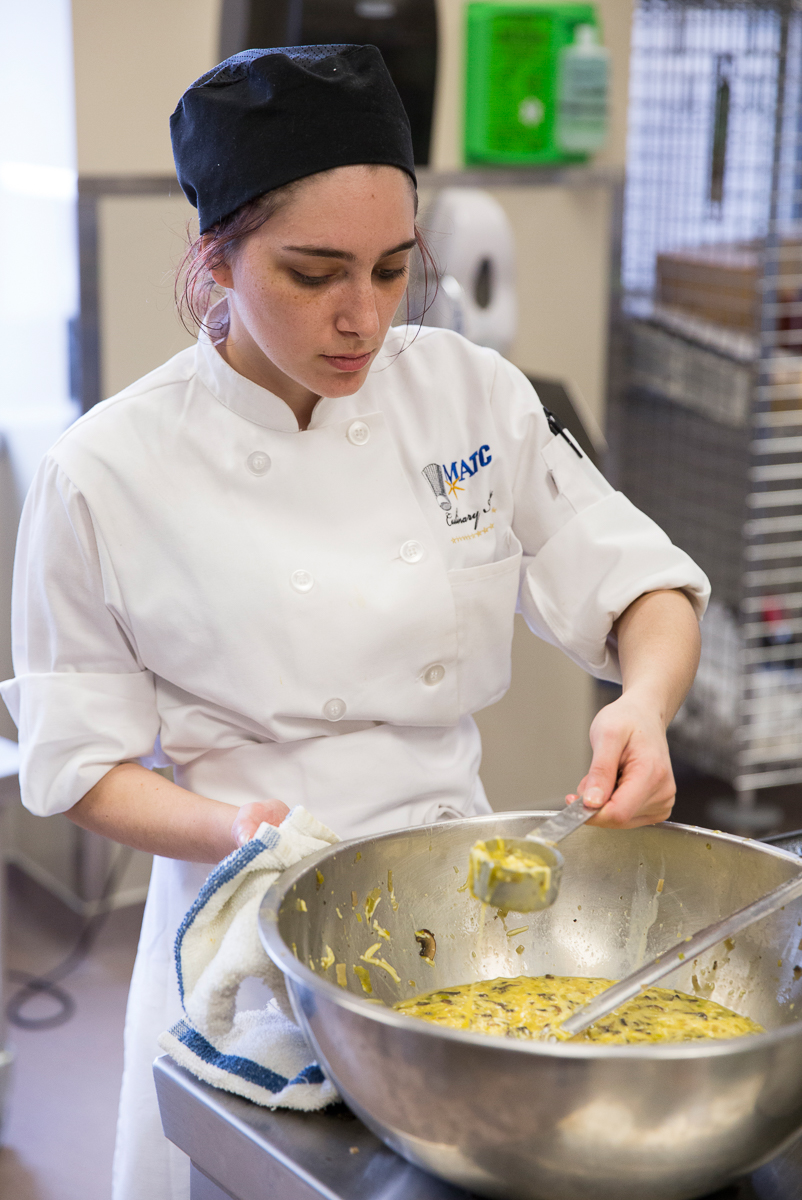
When information technology comes to food and sense of taste, seasoned chefs instinctively know what works and what does not piece of work. They develop a retentivity bank of flavors, tastes, aromas, textures, colors, and mouth feel that to imagine new dishes and flavor experiences.
Dining out or doing stages in other kitchens will aid accelerate your learning and competence. Taking seminars, workshops, and professional person classes besides helps to reinvigorate the creative juices. Your skills and knowledge will accelerate by being witting of flavor and sense of taste. When dining out, take the time to evaluate food and remember winning flavor combinations that yous experience. Try to replicate things you've tasted so you tin personalize it and make it your own. Continue up on trends, learn about different ethnic cuisines, and experiment with new equipment and techniques to feed your curiosity.
Larn to melt intuitively and don't be a slave to recipes. Develop a solid foundation of culinary math, cooking ratios, and percentages, so you can cook on the fly. An understanding of culinary science will eliminate many frustrating failures. Only failures can sometimes pb to breakthroughs, and so a chef should never become discouraged past them.
Inventiveness and improvisation, when it'southward grounded by noesis and skill, allows a chef to cope with challenging situations and achieve swell results.
Are y'all Passionate?

-
Passion for cooking and working with the public
-
Culinary math and the scientific discipline
-
Practicing your te techniques
-
Do yous desire to know why foods human activity a certain manner when combined and cooked?
-
Are you aware of the great gimmicky chefs, and what is happening in the food service manufacture?
-
Do you read books, magazines, and newspapers well-nigh the culinary field?
-
Do yous know who the great chefs are in the world, in your country or in your community?
-
Do you have a culinary library at dwelling house?
-
Practise you lot search for culinary trends or look for answers to culinary questions online?
-
Do you watch culinary videos on YouTube?
-
Do yous try to run into chefs and cooks who are active in your urban center and seek them out for advice and help with your career?
-
Are you curious about culinary tools, equipment, and new techniques?
-
Do you go to farmers markets to talk to the farmers and vendors nigh their products?
-
Practice you seek out opportunities to interact with other cooks and chefs at community and manufacture events?
-
Practise you practise your skills, even the ones you hate, at every opportunity including your days off?
Getting Up to Speed in the Kitchen
Station Setup

-
Develop a prep sheet and timeline for execution and completion.
-
Determine priorities for what items demand to be started kickoff and what items are secondary.
-
Be active and engaged while in the kitchen, and move with a sense of urgency and purpose.
-
Fix your station properly starting with your cutlery set, cutting boards, sanitation saucepan.
-
Keep containers at your station for waste, usable trim, and compost.
-
Don't forget to sharpen and steel your knives regularly. If you have your knives out you should e'er accept your steel out.
-
When beginning your prep piece of work in the kitchen, take as many things yous tin can assemble for your mise en place at one time to your station.
-
Never walk anywhere empty handed. If you are going to the storeroom, or walk-in, what can you lot take back to storage?
-
Eliminate trips to the walk-in cooler, dry out storage, or dish room by getting plenty things to keep you busy for a while but not and then much that it creates clutter, disorganization, or food safety issues.
Begin Production

-
Make sure y'all equipment is turned on and pre-oestrus broilers, ovens, etc.
-
Gather all of your tools and small wares for service.
-
When firing food, learn what to kickoff beginning, what can be started and somewhat ignored, and what needs constant attention.
-
Remember that items taking the longest to cook should exist started the earliest (stocks, soups, sauces, braises and stews).
-
Choose larger tasks or preps that don't require 100% of your attending the unabridged time and so you tin complete smaller tasks in betwixt (dicing veg tin be washed in between braising or sauce prep).
-
Start two or three projects at once that you can monitor and rotate through as they are developing or cooking.
-
Combine like tasks for faster prep and use the aforementioned movements to all the items. For example; peel all vegetables at in one case, diced all onions for multiple preps at once, flinch all vegetables at once.
-
Place a pile of small items like mushrooms or green beans on your cut board for prepping rather than picking them out of a container one at a time.
Cheque-In & Check-Off
-
Ask the chef, sous chef, or other cooks how long it typically should accept to practice a preparation or to set up your station.
-
Cheque the time when you start a project. See how long information technology takes to consummate and work to vanquish that time during the next opportunity.
-
Focus on not wasting movements
-
Think of the whole prep piece of work procedure as a huge puzzle and every bit you go familiar with your station all the pieces will come together.
-
Consistency is important; if yous accept the speed but produce a subpar product you will lose time fixing it.
-
Do and repetition volition make you faster and more efficient
-
Exist better tomorrow than you were today, and ameliorate yet the solar day after tomorrow
Working the Line
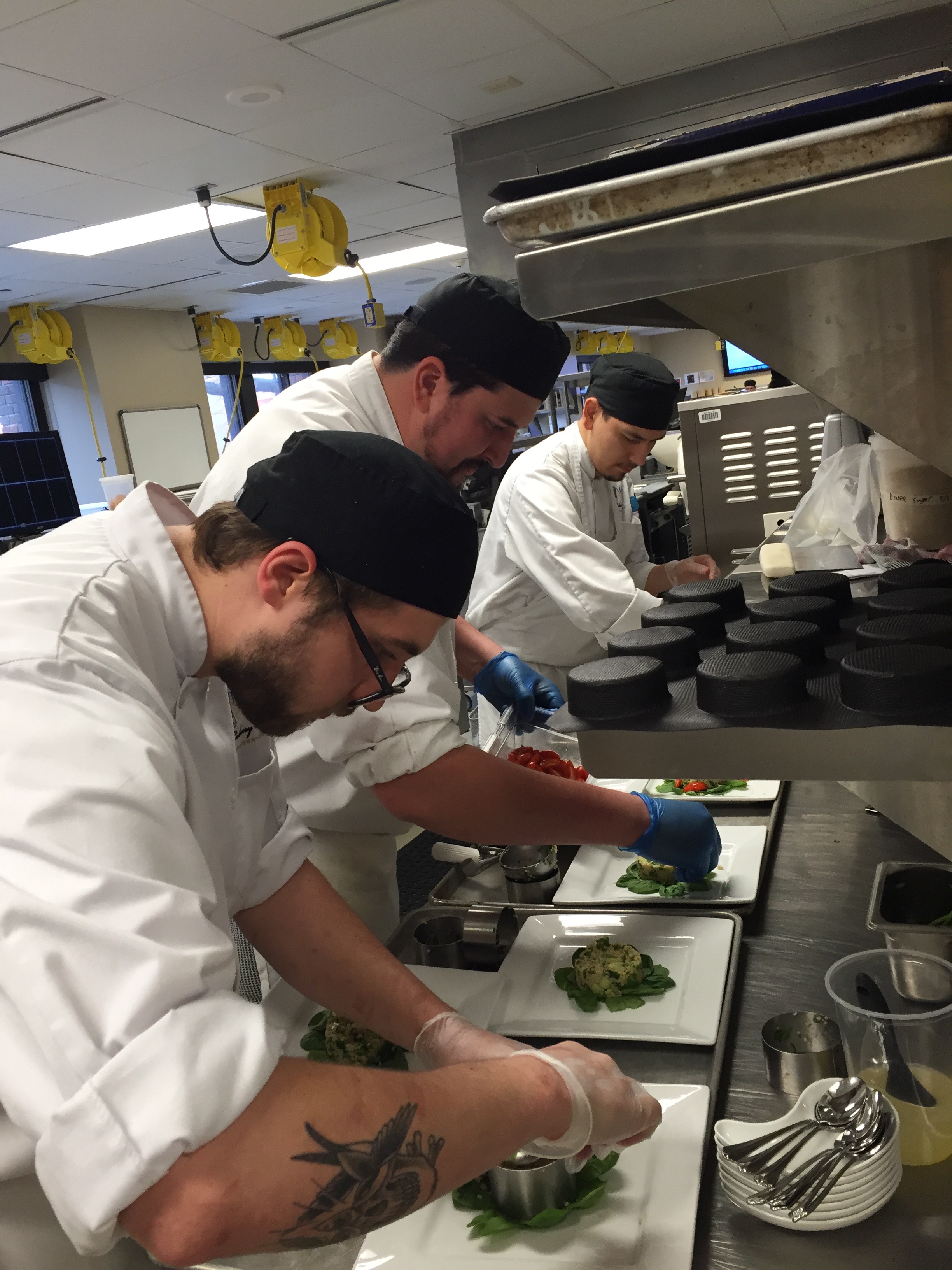
Teamwork & Communication
-
Communication with the culinary team is important during service time
-
Special requests will always create problems if you aren't paying proper attending to details
Working the Rush
-
Speed often results in sloppy work peculiarly if you lot have to spend extra time to redo information technology
-
Take time for plate presentations
-
Taking a little extra fourth dimension to complete an order is oftentimes forgiven if you deliver quality nutrient
-
Having sufficient mise en place, par levels, and backups will help you lot stay out of the weeds
-
Practise repetitive motions for minimal movement
Review & Furnish
-
Keep hydrated
-
Step back occasionally to get a ameliorate focus on your orders
-
Periodically enquire for an "all day" so you brand sure yous haven't missed any orders
-
Information technology's better to nether-cook a steak a trivial because information technology can always exist cooked more than. If information technology's overcooked you have to throw it out and outset over
-
Don't forget to taste sauces and other preparations prior to the offset of service.
-
Don't forget to season foods properly; taste every bit much equally yous can during service to maintain consistency
-
Don't get discouraged when multiple tickets are called in, just go along focused
-
Don't be too proud to enquire for assistance if you get in the weeds!
Arrangement
Expect at the big movie - Mental Focus
-
Be knowledgeable about your work station and understand how it integrates with the rest of the kitchen and the unabridged performance.
-
On your way to piece of work before yous begin your shift, plan and visualize your prep from offset to end.
Personal Mise en Place
-
Sharpen your cutlery prior to the offset of your shift.
-
Organize the tools and equipment y'all will need at the beginning of your shift.
Planning Your Prep
-
Plan out a prep list of your station and know before you get in the door exactly what y'all will need to do to become your station set up in time for service.
-
A prep sheet includes par stock of each particular needed for the day.
-
Fix guild sheets if information technology is your responsibleness to guild food for your station.
Station Organization

-
Always follow through and cease up your prep; don't get out things half washed or not cleaned properly.
-
Render nutrient and equipment to their proper storage identify.
-
Don't get out your prep work for others to do.
-
Practice multi-tasking and work simplification.
-
Go along a clean station and periodically stop to clean up and re-organize yourself.
-
Behave an instant read thermometer and a kitchen towel with you at all times
-
Use a timer to remind y'all when yous take things in the oven.
-
De-cluttering will amend your work-space immediately.
-
Organize your space to allow for the most used items to be in like shooting fish in a barrel reach. Organize your walk-in and reach-in areas similarly, making sure you label all allocated infinite - dry, common cold, freezer, etc.
The Large & Pocket-sized Picture
-
The key to productivity is not equal load-sharing only cantankerous-trained people who can support more than one station. This is where grooming and coaching is disquisitional.
-
Rushing doesn't assist if y'all take to do the job over over again because information technology creates sloppiness and poor quality.
-
Pay attention to the small details that will make you a amend culinary professional person.
Culinary Skills
What every culinary professional should know
The Foundation
-
Mise en place skills, prepare upwardly, service, breakdown and cleanup
-
Culinary math and science
-
Sanitation
-
Knife Skills
-
Classic vegetable cuts
-
Bones cooking techniques, sauté, grill, roast, fry, braise, broil, and poach
-
Herb and spice identification
-
How to season
-
Classic indigenous flavour profiles
-
Flavor layering
Stocks, Soups & Sauces

-
Stock preparation
-
Soup, clear, consommé, cream, puree, and bisque
-
Sauce Preparation, grande sauces, pocket-size sauces, beurre blanc, coulis, pan sauces
-
Cold sauces, vinaigrettes and emulsions
Proteins
-
Understand meat cuts to apply the appropriate cooking technique
-
Butchering meat, poultry and fish
-
Egg cookery, omelets, boiled, poached, fried
Veg Prep
-
Properly cooking vegetables to maintain good color and texture
-
Cleaning and handling fresh greens
-
Garnishing salads
-
Cooking grains and legumes
-
Pasta dough from scratch
Pastry

-
Basic pastry doughs
-
Basic cakes sponge, angel food
-
Ice cream and sorbet grooming
-
Quick breads and muffins
-
Yeast dough
-
Dessert sauces, anglaise, caramel, chocolate, fruit coulis
Math & Science
-
Know culinary math and study the science of cooking.
-
Know your measurements and learn to convert them from memory.
-
Acquire how to melt less with recipes and more with ratios and percentages.
-
Know your techniques then that cooking becomes intuitive.
-
Pay attending to what happens in the cooking process so that you can echo successes and avoid failures.
-
Keep a log or journal when y'all are testing recipes or techniques.
Improvisation
-
Learn to improvise cooking equipment, tools, and methods
-
Recognize that things change chop-chop in food service.
-
Know how to substitute ingredients if you don't have something in your kitchen.
-
Know how to set up up makeshift equipment in case of power outages or equipment breakdown.
-
If the customer wants a commutation and that's the policy, don't complain about it but do it.
Squad Piece of work

-
The culinary arts is a team sport.
-
Cross-Train so you tin assist in other areas of the kitchen as needed.
-
Help kitchen team members when they are in the weeds.
-
Have informal meetings during your shift to discuss kitchen production.
Temperament
-
A great chef has the stamina to go on going for long periods under high pressure
Career Planning

-
Stays focused on profession goals, and empathise that all experiences will ultimately help in shaping your career.
-
Recognize that you may accept to settle for less pay and exercise tedious work when yous first out and then you tin acquire and do your craft.
-
Practice every gamble, at dwelling house, at piece of work, in your dreams, on your mean solar day off.
Be Physically & Mentally Fit
-
Stay physically fit because irksome prep work can make your back and feet anguish.
-
You must be able to think on your feet and improvise when need be.
-
Exist flexible when it comes to prep and service as things change on a moment's notice.
-
Accept exterior interests to relieve stress; get to the gym for a work out, run, or meditate.
Stay Out of the Weeds and Avoid the Cliff
-
Don't let the sound of another ticket coming in discourage you or stress you out.
-
Never compromise quality just for the sake of putting plates out.
-
Recognize immediately when you make a mistake and quickly identify if yous tin can ready it without sacrificing standards.
-
Keep a cool caput because in that location will be times when it is going to become rough and yous will need to piece of work through it.
-
Be curious, accept a willingness to learn and never get complacent.
-
Stay cool and calm through annihilation a prep twenty-four hours or service tin throw at y'all.
0 Response to "If Building New What Are 3 Things to Consider When Choosing a Site? Culinary Arts"
Postar um comentário